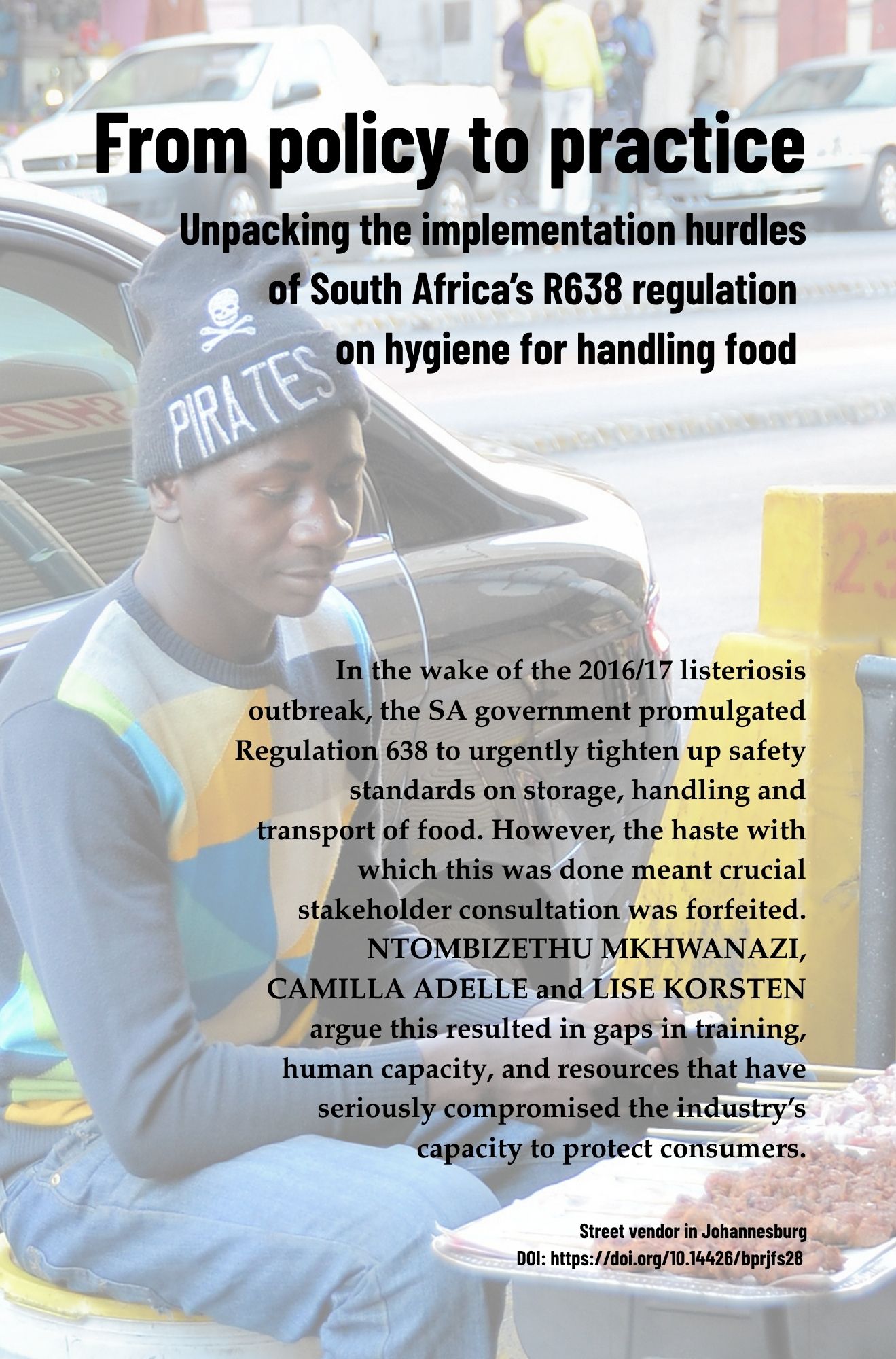
From policy to practice
Unpacking the implementation hurdles of SA’s R638 Regulation
DOI:
https://doi.org/10.14426/bprjfs28Keywords:
Stakeholders; Regulation R638; policy network; implementation; South AfricaAbstract
This case study examines the implementation of Regulation R638, which outlines general hygiene requirements for food premises and the transport of food in South Africa. The regulation was introduced without stakeholder consultation due to the urgency of addressing public health concerns, particularly following the listeriosis outbreak across the country in 2017/18. This study explores the roles of various stakeholders, including government, industry, civil society, and research institutions, in the implementation of Regulation R638 and identifies significant challenges in enforcement. Key challenges include budgetary constraints, insufficient training, lack of institutional capacity, and non-compliance among food handlers. The findings highlight how the absence of stakeholder engagement during the regulation’s formulation has hindered effective implementation. Additionally, the study underscores the complexities of policy networks at different levels of government and the impact of resource allocation on food safety governance. The results suggest that the top-down approach adopted by the Department of Health, although necessary in response to a public health crisis, has led to difficulties in practical enforcement, underscoring the need for more inclusive and well-planned regulatory processes.
Downloads
Downloads
Published
Issue
Section
License
Copyright (c) 2026 Ntombizethu Mkhwanazi, Camilla Adelle, Lisa Korsten

This work is licensed under a Creative Commons Attribution-ShareAlike 4.0 International License.